Cart
0

Car wrapping requires a combination of precision, preparation, and the right tools. Whether you’re a beginner or aiming for professional-level results, having a complete toolkit ensures smoother application, fewer mistakes, and a long-lasting finish.
Below is a complete, up-to-date checklist of the best tools you’ll need for car wrapping in 2026.
🔧 1. Vinyl Wrap Film (Core Material)
The foundation of any wrap project is the vinyl itself.
What to look for:
- Air-release technology (bubble-free application)
- High-quality adhesive
- Stretchable and durable material
- Available in gloss, matte, satin, chrome, carbon fiber finishes
👉 The quality of vinyl directly impacts the final look and durability.
🔥 2. Heat Gun
A heat gun is one of the most essential tools in car wrapping.
Uses:
- Softening vinyl for curves and edges
- Activating adhesive
- Removing wrinkles
- Post-heating to secure the wrap
Heat helps the vinyl become flexible and conform to complex surfaces.
🧽 3. Squeegees (Felt-Edge Recommended)
Squeegees are used to apply vinyl smoothly and remove air bubbles.
Types:
- Felt-edge squeegee (best for beginners)
- Hard plastic squeegee
- Micro/detail squeegee for tight areas
They help press the vinyl evenly and prevent trapped air.
🔪 4. Precision Cutting Tools
Clean cutting is critical for a professional finish.
Tools include:
- Precision knife / utility knife
- Replaceable blades (30° or 60°)
- Knifeless tape (safe cutting without touching paint)
Sharp blades ensure accurate trimming around edges and seams.
🧴 5. Surface Cleaning Supplies
Proper preparation is key to strong adhesion.
Must-have items:
- Isopropyl alcohol (IPA)
- Microfiber cloths
- Degreaser or surface cleaner
- Clay bar (optional for deep cleaning)
Clean surfaces prevent bubbles, peeling, and contamination.
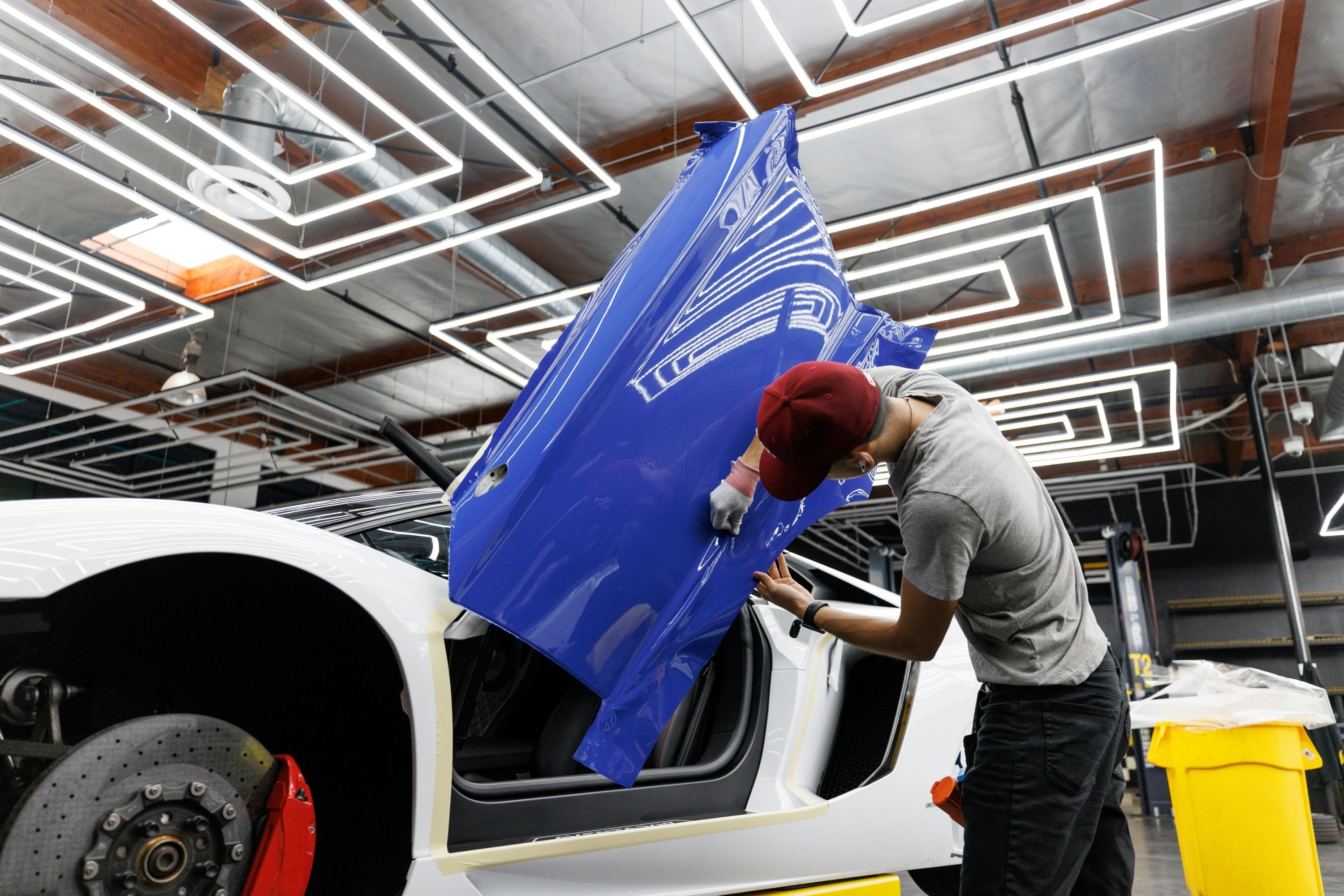
🧤 6. Wrap Gloves
Gloves protect both the vinyl and the installer.
Benefits:
- Prevent fingerprints and oils
- Improve grip and control
- Reduce scratches during handling
Nitrile or lint-free gloves are commonly used.
🧲 7. Magnets / Magnetic Holders
Useful for holding vinyl in place during alignment.
Why they help:
- Keep vinyl steady before application
- Allow repositioning without damage
- Ideal for solo installers
Magnets are especially helpful when working on large panels.
📏 8. Measuring & Marking Tools
Accuracy is important for alignment and cutting.
Includes:
- Measuring tape
- Rulers or straight edges
- Marking pens or chalk
These tools help ensure precise placement before cutting or applying vinyl.
🧲 9. Edge & Detail Tools
These tools help with finishing touches in tight areas.
Examples:
- Plastic pry tools
- Tucking tools
- Detail picks and tweezers
They are essential for wrapping corners, seams, and trims cleanly.
🌡️ 10. Infrared Thermometer (Optional but Professional)
Used to measure surface temperature during installation.
Why it matters:
- Ensures proper heating range
- Prevents overheating or underheating
- Helps maintain consistent results
This is commonly used by professional installers for precision.
🧰 11. Application Accessories & Extras
These tools improve workflow and efficiency:
- Masking tape (for alignment and protection)
- Slip solution spray (for repositioning vinyl)
- Knifeless tape (clean cutting without blades)
- Extension cords / tool organizers
- Headlamp for better visibility in tight areas
🧹 12. Clean & Controlled Workspace
Not a tool—but absolutely essential.
Ideal conditions:
- Dust-free environment
- Good lighting
- Moderate temperature
- Indoor workspace preferred
A clean environment prevents dust contamination and ensures a flawless finish.
✅ Complete Quick Checklist
Here’s a simplified checklist of everything:
- Vinyl wrap film
- Heat gun
- Squeegees (felt-edge + detail)
- Precision cutting knife / knifeless tape
- Isopropyl alcohol + microfiber cloth
- Wrap gloves
- Magnets or tape for positioning
- Measuring & marking tools
- Edge/detail tools
- Infrared thermometer (optional)
- Masking tape & accessories
- Clean workspace